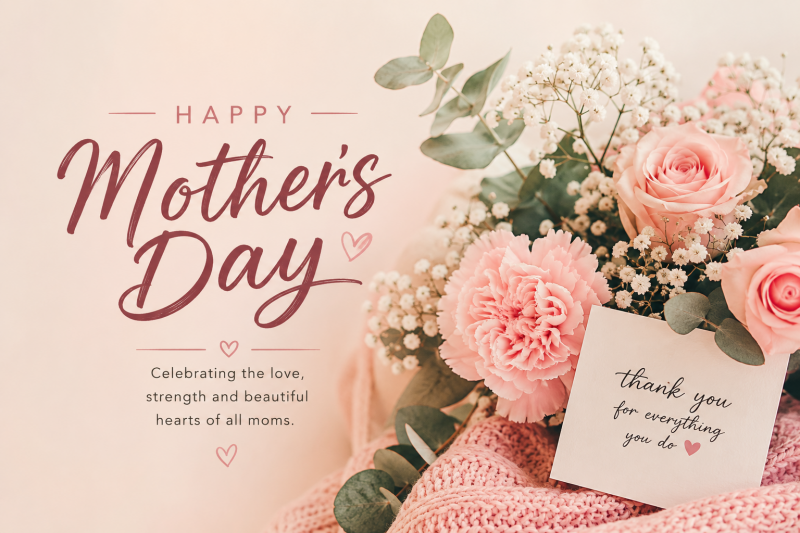
Mother’s Day: the magical time of year when restaurants are overbooked, flower prices skyrocket, and millions of adults suddenly remember they haven’t called their mother back since February.
But behind the mimosas, scented candles, and frantic last-minute drugstore cards lies a surprisingly fascinating—and slightly chaotic—history.
Turns out Mother’s Day wasn’t originally about spa gift certificates and breakfast in bed. It started with activism, heartbreak, and one woman who eventually hated what the holiday became.
Yes. The founder of Mother’s Day basically tried to cancel Mother’s Day.
Honestly? Iconic behavior.
It Started With Strong Women Who Were Tired of Everyone’s Nonsense
The roots of Mother’s Day go all the way back to the 1800s, when women began organizing movements focused on improving public health and caring for families during incredibly difficult times.
One early influence was a woman named Ann Reeves Jarvis, who created “Mother’s Day Work Clubs” in the 1850s. These groups helped teach women sanitation practices and cared for sick families during outbreaks of disease.
Which means the original Mother’s Day energy was less:
“Here’s a lavender bath bomb.”
And more:
“We are literally trying to keep the town alive.”
During the Civil War, mothers often cared for wounded soldiers on both sides. Afterward, activist Julia Ward Howe—yes, the same woman who wrote “The Battle Hymn of the Republic”—proposed a “Mother’s Peace Day” in 1870.
Her vision?
Mothers uniting to promote peace and stop men from constantly turning the planet into a battlefield.
Frankly, still a reasonable request.
The Woman Who Officially Created Mother’s Day
The modern version of Mother’s Day was largely created thanks to Anna Jarvis, daughter of Ann Reeves Jarvis.
After her mother died in 1905, Anna wanted to create a day specifically dedicated to honoring mothers and the sacrifices they made for their children.
And honestly, fair.
Mothers had been:
-
raising children
-
surviving chaos
-
finding missing shoes
-
emotionally supporting everyone
-
pretending they “didn’t want anything” for birthdays
…for centuries.
Anna organized the first official Mother’s Day celebration in 1908 in Grafton, and the idea spread rapidly.
By 1914, President Woodrow Wilson officially declared Mother’s Day a national holiday in the United States.
And then everything got wildly commercial.
The Founder Immediately Regretted Everything
This is where the story becomes truly incredible.
Anna Jarvis absolutely despised what Mother’s Day turned into.
She believed the holiday should focus on sincere gratitude—not businesses selling overpriced roses and greeting cards with poems that rhyme “mother” with “another.”
She especially hated:
-
florists
-
candy companies
-
greeting card corporations
-
basically capitalism in general by this point
She once said buying a prewritten card was lazy because:
“You’re too lazy to write to the woman who has done more for you than anyone in the world.”
Honestly… she had a point.
Anna spent years fighting the commercialization of Mother’s Day. She protested events, filed lawsuits, and even got arrested while disrupting a Mother’s Day gathering.
Imagine inventing a holiday and then spending the rest of your life angrily trying to destroy it.
That’s commitment.
Mother’s Day Around the World
Different countries celebrate Mother’s Day in different ways, proving mothers everywhere are universally exhausted.
In:
-
United Kingdom, “Mothering Sunday” has religious roots dating back centuries.
-
Mexico, Mother’s Day celebrations often include music, large family gatherings, and serenades.
-
Japan, carnations are commonly given as symbols of love and gratitude.
-
Ethiopia, families celebrate motherhood with a multi-day feast during the Antrosht festival.
Meanwhile in America, many mothers simply dream of:
-
one uninterrupted nap
-
coffee while it’s still hot
-
and nobody asking where the ketchup is for five consecutive minutes
The Real Meaning of Mother’s Day
At its core, Mother’s Day isn’t really about expensive gifts.
It’s about recognizing the women who:
-
held families together with sheer determination
-
magically knew where everything was
-
gave life advice nobody appreciated until age 32
-
survived PTA meetings
-
somehow heard a child whisper “Mom” from three rooms away
Whether it’s your mom, grandmother, stepmother, aunt, mentor, or someone who simply showed up and loved you like family—Mother’s Day is about appreciation.
Even if your relationship with your mother is complicated, the day can still be a moment to reflect on love, resilience, family, and the strange beautiful chaos of human connection.
Also, maybe send the text back.
You know the one.
Final Thoughts
So this Mother’s Day, while you’re eating pancakes at an overcrowded brunch restaurant or panic-ordering flowers online at 11:48 PM the night before, remember:
The holiday began with powerful women trying to improve society…
and ended with people fighting over parking spaces outside Target.
History is beautiful like that.
Happy Mother's Day! I miss mine!
Lise
Add comment
Comments